



 US
US UK
UK France
 Australia
Alzheimer’s and Brain Awareness Month is an opportunity to highlight a message clinicians can share with patients and caregivers: movement matters for the brain. Exercise is not a cure for Alzheimer’s disease, but regular physical activity is associated with better overall brain health and helps support cognition, mobility, mood, cardiovascular health, and activities of daily living.1,2,4 For individuals already living with Alzheimer’s disease, the goal is not simply to “exercise more,” but to use movement strategically to preserve function, reduce fall risk, and support meaningful participation.
For clinicians, the most useful exercise framework may be simple: use aerobic exercise as the foundation for brain health and cognition, then use balance/dual-task training to help patients translate movement into safer daily life function.
Key Takeaways
- Aerobic exercise is the strongest exercise category to emphasize general brain health and Alzheimer’s-related cognition.3,4
- A practical aerobic target is to gradually build toward 150 minutes per week of moderate-intensity activity, adjusted for safety and tolerance.5,8
- Dual-task training helps address the real-world challenge of moving while thinking, talking, scanning, carrying, or navigating.7
- Patients with Alzheimer’s disease may show a tradeoff between balance and cognition during dual-task activities.
Table of Contents
Why Exercise Matters for Brain Health
Exercise supports the brain through multiple pathways. Aerobic activity can improve cardiovascular fitness and blood flow, support metabolic health, reduce vascular risk factors, and influence brain regions involved in memory and executive function. In older adults without dementia, aerobic exercise has been shown to increase anterior hippocampal volume and improve spatial memory, highlighting a potential mechanism for exercise-related brain benefits.³
Balance and dual-task training are also important parts of brain-health programming because they reflect how patients move in the real world. Daily mobility rarely happens in isolation: patients walk while talking, turn while searching for objects, scan the environment, or respond to distractions. These situations require the brain to coordinate attention, executive function, sensory information, and postural control at the same time. In patients with Alzheimer’s disease or cognitive impairment, this added cognitive-motor load may reveal instability that is not obvious during simple walking. Dual-task activities can therefore help clinicians identify the tradeoff between cognition and balance, while balance training can help improve the physical foundation needed for safer movement.⁶˒⁷
Aerobic Exercise
Aerobic exercise is often the most accessible starting point for brain health because it supports cardiovascular health, endurance, mood, sleep, and walking tolerance. In a randomized controlled trial of individuals with early Alzheimer’s disease, Morris et al. studied a 26-week aerobic program targeting 150 minutes per week. Improved fitness was associated with better memory performance.5
Clinical dosing guidance:
A practical long-term goal is to build toward 150 minutes per week of moderate-intensity aerobic activity, consistent with general adult physical activity recommendations.⁸ For patients with Alzheimer’s disease, begin with a dose they can complete safely and consistently.
Starting point:
- 10–15 minutes per session
- 3 days per week
- Walking, stationary cycling, seated stepping, or treadmill walking with supervision
- Light-to-moderate intensity using the talk test, RPE, heart rate, and clinical judgment
Progression goal:
- 20–30 minutes per session
- 3–5 days per week
- Gradually accumulate toward 90–150 minutes per week as tolerated
Clinical advice:
Choose familiar activities. Walking may be more successful than a new machine-based task because it is functional and easier for caregivers to support at home. Keep the route predictable, reduce distractions, and consider music, visual landmarks, or caregiver walking partners to improve adherence.
Balance and Dual-Task Training
Balance and dual-task training are especially relevant for Alzheimer’s care because falls often happen during real-world divided-attention situations: walking while talking, turning while looking for an object, stepping over a threshold, carrying laundry, or navigating a busy room.
A systematic review and meta-analysis by Ali et al. found that dual-task training can improve cognitive and physical outcomes in older adults with cognitive impairment, dementia, or Alzheimer’s disease.⁷
The key clinical concept is the tradeoff between balance and cognition. Some patients preserve conversation but slow down, shorten steps, or become unstable. Others preserve gait but stop responding cognitively. Both patterns provide useful information about fall risk and cognitive-motor load.
Balance progression examples:
- Weight shifts
- Reaching within base of support
- Sit-to-stand with controlled standing balance
- Stepping to visual targets (BlazePods)
- Turning practice
- Obstacle negotiation
- Foam or compliant surface
- Foam or compliant surface with eyes closed
Dual-task progression examples:
- Walk while naming familiar categories
- Step to targets while identifying colors
- Carry a light object while walking
- Turn and locate a visual marker
- Count forward/backward during dynamic task
- Progress to more complex tasks only if gait remains safe
Overall Clinical Programming Tips
A practical weekly structure may include:
- Aerobic: 3–5 days per week, targeting 150min a week
- Balance: 2–4 days per week
- Dual-task: 1–3 days per week
Conclusion
For Alzheimer’s and Brain Awareness, the clearest exercise message is that aerobic exercise is the foundation for brain health and cognition, while dual-task training helps translate movement into daily life function. Aerobic exercise supports the cardiovascular and physiologic systems that the brain depends on, with a practical goal of gradually building toward 150 minutes of moderate-intensity activity per week. Dual-task training addresses the real-world challenge of moving while thinking. Together, these approaches give clinicians a practical framework for helping patients maintain mobility, safety, confidence, and participation.
Recommended Products
- Cardio Equipment: Treadmills, Pedal Exercisers — for building aerobic capacity through walking, seated stepping, or cycling.
- BlazePod Flash Reflex Training System — for light-cued stepping, reaching, reaction time, visual attention, and dual-task drills.
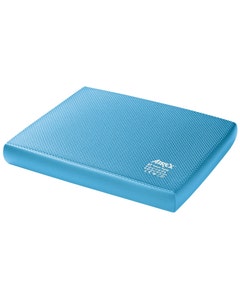
- AIREX Balance Pad XL or Balance Pads — for supervised balance progressions, weight shifting, stepping, and postural control activities.
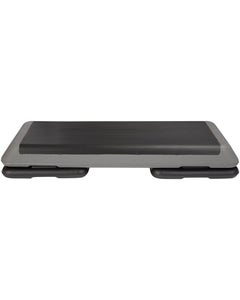
- Cones, visual markers, and step platforms — for walking routes, target stepping, turning practice, obstacle negotiation, and dual-task progressions.
- Sammons Preston Gait Belts — for safer gait training, balance activities, transfers, and caregiver instruction.






References
- World Health Organization. (2019). Risk reduction of cognitive decline and dementia: WHO guidelines. World Health Organization.
- Livingston, G., Huntley, J., Liu, K. Y., Costafreda, S. G., Selbæk, G., Alladi, S., Ames, D., Banerjee, S., Burns, A., Brayne, C., Fox, N. C., Ferri, C. P., Gitlin, L. N., Howard, R., Kales, H. C., Kivimäki, M., Larson, E. B., Nakasujja, N., Rockwood, K., ... Mukadam, N. (2024). Dementia prevention, intervention, and care: 2024 report of the Lancet standing Commission. The Lancet, 404(10452), 572–628. doi: 10.1016/S0140-6736(24)01296-0
- Erickson, K. I., Voss, M. W., Prakash, R. S., Basak, C., Szabo, A., Chaddock, L., Kim, J. S., Heo, S., Alves, H., White, S. M., Wojcicki, T. R., Mailey, E., Vieira, V. J., Martin, S. A., Pence, B. D., Woods, J. A., McAuley, E., & Kramer, A. F. (2011). Exercise training increases size of hippocampus and improves memory. Proceedings of the National Academy of Sciences, 108(7), 3017–3022. doi: 10.1073/pnas.1015950108
- Zhou, S., Chen, S., Liu, X., Zhang, Y., Zhao, M., & Li, W. (2022). Physical activity improves cognition and activities of daily living in adults with Alzheimer’s disease: A systematic review and meta-analysis. Frontiers in Public Health, 10, 799692. doi: 10.3389/fpubh.2022.799692
- Morris, J. K., Vidoni, E. D., Johnson, D. K., Van Sciver, A., Mahnken, J. D., Honea, R. A., Wilkins, H. M., Brooks, W. M., Billinger, S. A., Swerdlow, R. H., & Burns, J. M. (2017). Aerobic exercise for Alzheimer’s disease: A randomized controlled pilot trial. PLOS ONE, 12(2), e0170547. doi: 10.1371/journal.pone.0170547
- Suttanon, P., Hill, K. D., Said, C. M., Williams, S. B., Byrne, K. N., LoGiudice, D., Lautenschlager, N. T., & Dodd, K. J. (2013). Feasibility, safety and preliminary evidence of the effectiveness of a home-based exercise programme for older people with Alzheimer’s disease: A pilot randomized controlled trial. Clinical Rehabilitation, 27(5), 427–438. doi: 10.1177/0269215512460877
- Ali, N., Tian, H., Thabane, L., Ma, J., Wu, H., Zhong, Q., Gao, Y., Sun, C., Zhu, Y., & Wang, T. (2022). The effects of dual-task training on cognitive and physical functions in older adults with cognitive impairment: A systematic review and meta-analysis. The Journal of Prevention of Alzheimer’s Disease, 9(2), 359–370. doi: 10.14283/jpad.2022.16
- U.S. Department of Health and Human Services. (2018). Physical activity guidelines for Americans (2nd ed.). U.S. Department of Health and Human Services.
Medical Disclaimer: The information provided on this site, including text, graphics, images, and other material are for informational purposes only and are not intended to substitute for professional medical advice, diagnosis, or treatment. Always seek the advice of your physician or other healthcare professional with any questions or concerns you may have regarding your condition.