


 US
US UK
UK France
 Australia
Now that you’ve gone through delivery and have your baby in your arms, balancing motherhood and self care is the new normal. So, while you’re taking care of the needs of that little bundle of joy, your postpartum body has needs too. This isn’t about fitting into your pre-pregnancy jeans or a number on the scale, but rather making sure you’re the strongest woman and mom that you can be.
All of that starts with the pelvic floor.
What is the pelvic floor?
Your pelvic floor muscles are between your tailbone and your pubic bone and span the entire width of your body. Want to know exactly where they are? They’re the muscles you tighten to stop urinating. They support everything from the bowels and bladder to the uterus and vagina. Not only are these the very muscles that helped deliver your baby, but they also do some other pretty major things like helping to control your bladder and even your sexual response.
Why should the pelvic floor be the centerpiece in your postpartum exercise journey?
Childbirth can weaken the muscles of your pelvic floor and cause problems for you later in life. Though you shouldn’t start any exercise program without first speaking to your doctor (and listening to yourself and your own body), when you are ready, be sure to pay attention to the pelvic floor.
Without strengthening it again, you could experience fun things like incontinence or leakage of urine when you sneeze.
How do you start strengthening the pelvic floor?
Kegels
You may have heard about kegel exercises before – these exercises strengthen the pelvic floor. Do your best to relax your abdominal muscles. Don’t bear down (the opposite of labor!) or hold your breath. Slowly squeeze while increasing the tension until you have contracted your pelvic muscles muscles as hard as you can. Release gently and slowly.
If you want to take your kegels to the next level, try using a kegel exercise system. If you use these weights for 15 minutes twice a day, you should see results in 12 weeks. Simply insert the kegel weight in your vagina. Your muscles–the ones we’ve been talking about–will naturally contract around the weight. Overtime, these contractions will strengthen and tone your pelvic floor muscles. After 15 minutes, just remove the weight using the attached cord.
The Bridge Squeeze
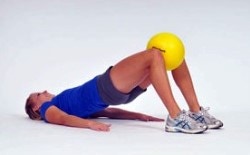
- Lie on your back with your arms by your sides and knees bent.
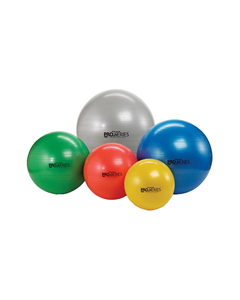
- Place a small exercise ball between your knees and squeeze the ball and your glutes as you lift your hips up to the ceiling into a bridge position.
- Hold for six seconds, then slowly lower. Repeat 10 times.
Recap
At this point, you’ve probably realized that the word “mom” has become a synonym for multitasking. The great thing about these exercises and taking care of your pelvic floor in general–which is so very important–is that you can do it while feeding the baby or before you go to sleep at night, whether you go back to work or plan on staying home. Standing, sitting, or lying down, you’re good to go when it comes to strengthening that integral pelvic floor.
Medical Disclaimer: The information provided on this site, including text, graphics, images and other material, are for informational purposes only and are not intended to substitute for professional medical advice, diagnosis or treatment. Always seek the advice of your physician or other healthcare professional with any questions or concerns you may have regarding your condition.
Now that you’ve gone through delivery and have your baby in your arms, balancing motherhood and self care is the new normal. So, while you’re taking care of the needs of that little bundle of joy, your postpartum body has needs too. This isn’t about fitting into your pre-pregnancy jeans or a number on the scale, but rather making sure you’re the strongest woman and mom that you can be.
All of that starts with the pelvic floor.
What is the Pelvic Floor?
Your pelvic floor muscles are between your tailbone and your pubic bone and span the entire width of your body. Want to know exactly where they are? They’re the muscles you tighten to stop urinating. They support everything from the bowels and bladder to the uterus and vagina. Not only are these the very muscles that helped deliver your baby, but they also do some other pretty major things like helping to control your bladder and even your sexual response.
Why Should the Pelvic Floor be the Centerpiece in Your Postpartum Exercise Journey?
Childbirth can weaken the muscles of your pelvic floor and cause problems for you later in life. Though you shouldn’t start any exercise program without first speaking to your doctor (and listening to yourself and your own body), when you are ready, be sure to pay attention to the pelvic floor.
Without strengthening it again, you could experience fun things like incontinence or leakage of urine when you sneeze.
What Do Experts Recommend for Postpartum Pelvic Floor Exercise?
Clinical guidelines consistently recognize pelvic floor muscle training as an important part of postpartum recovery. Rather than waiting for a single six‑week check‑in, experts now emphasize a phased, individualized approach to physical recovery after childbirth.
The American College of Obstetricians and Gynecologists (ACOG) encourages postpartum physical activity—including pelvic floor exercises—when medically appropriate, noting that recovery continues well beyond the early weeks after delivery. Pelvic health, core strength, and functional movement are all considered part of ongoing postpartum care rather than one‑time clearance milestones.
Likewise, the National Institute for Health and Care Excellence (NICE) identifies pelvic floor muscle training (PFMT) as an effective strategy for both the prevention and management of pelvic floor dysfunction following childbirth, even in individuals without symptoms.
How do You Start Strengthening the Pelvic Floor?
Kegels
You may have heard about kegel exercises before – these exercises strengthen the pelvic floor. Do your best to relax your abdominal muscles. Don’t bear down (the opposite of labor!) or hold your breath. Slowly squeeze while increasing the tension until you have contracted your pelvic muscles muscles as hard as you can. Release gently and slowly.
If you want to take your kegels to the next level, try using a kegel exercise system. If you use these weights for 15 minutes twice a day, you should see results in 12 weeks. Simply insert the kegel weight in your vagina. Your muscles–the ones we’ve been talking about–will naturally contract around the weight. Overtime, these contractions will strengthen and tone your pelvic floor muscles. After 15 minutes, just remove the weight using the attached cord.
The Bridge Squeeze
- Lie on your back with your arms by your sides and knees bent.
- Place a small exercise ball between your knees and squeeze the ball and your glutes as you lift your hips up to the ceiling into a bridge position.
- Hold for six seconds, then slowly lower. Repeat 10 times.
Why Pelvic Floor Exercises Matter After Childbirth
A large systematic review and meta‑analysis published in the British Journal of Sports Medicine examined 65 studies with over 21,000 postpartum participants. The findings showed that exercise during the first year postpartum—including targeted pelvic floor training—was associated with fewer pelvic floor symptoms, such as urinary incontinence and pelvic organ prolapse.
Additional evidence summarized by the University of Alberta reinforces that pelvic floor muscle training can help reduce the likelihood and severity of common postpartum pelvic floor problems. Importantly, these findings challenge the idea that pelvic floor dysfunction is an unavoidable result of pregnancy and childbirth.
Pelvic floor training may also support sexual function and pelvic muscle strength, expanding its role beyond bladder control alone, according to a systematic review presented by the International Continence Society (ICS).
The Pelvic Floor Works With the Core — Not in Isolation
While pelvic floor exercises are commonly associated with Kegels, current research highlights that the pelvic floor functions as part of the body’s core system, working alongside the diaphragm, abdominal muscles, and hips.
A peer‑reviewed commentary in the International Journal of Sports Physical Therapy explains that postpartum recovery—including pelvic floor rehabilitation—is most effective when exercises are progressive, coordinated with breathing, and integrated into functional movement rather than performed in isolation.
This systems‑based approach is supported by guidance from the International Continence Society (ICS) and the International Urogynecological Association (IUGA), which emphasizes consistent assessment and management of pelvic floor disorders within the broader context of movement and daily function.
When to Seek Additional Pelvic Floor Support Postpartum
Pelvic floor symptoms after childbirth are common—but they are not something people have to “just live with.” Early identification and appropriate support can make a meaningful difference.
Clinical experts recommend seeking additional help if symptoms such as urinary leakage, pelvic pressure, pain with movement, or difficulty engaging the pelvic floor muscles persist or interfere with daily activities.
A clinical review in Obstetrics and Gynecology Clinics of North America highlights the importance of avoiding the “over‑normalization” of postpartum pelvic floor symptoms and encouraging early referral to professionals such as pelvic health physical therapists when needed.
ACOG’s postpartum care guidance further supports ongoing assessment throughout the postpartum period, reinforcing that pelvic floor health is a key part of long‑term physical recovery after childbirth.
Recap
At this point, you’ve probably realized that the word “mom” has become a synonym for multitasking. The great thing about these exercises and taking care of your pelvic floor in general–which is so very important–is that you can do it while feeding the baby or before you go to sleep at night, whether you go back to work or plan on staying home. Standing, sitting, or lying down, you’re good to go when it comes to strengthening that integral pelvic floor.
Recommended Products



References
- American College of Obstetricians and Gynecologists (ACOG). Physical Activity and Exercise During Pregnancy and the Postpartum Period (2020).
- American College of Obstetricians and Gynecologists (ACOG). Optimizing Postpartum Care (2018).
- National Institute for Health and Care Excellence (NICE). Pelvic floor dysfunction: prevention and non‑surgical management (NG210) (2021).
- Beamish NF, Davenport MH, et al. Impact of postpartum exercise on pelvic floor disorders and diastasis recti abdominis. British Journal of Sports Medicine.
- University of Alberta. Exercise reduces risk of common postpartum pelvic floor problems (2025).
- International Continence Society (ICS). Pelvic floor muscle training in sexual function of postpartum women: systematic review (2024).
- Selman R, Early K, et al. Maximizing Recovery in the Postpartum Period. International Journal of Sports Physical Therapy (2022).
- Doumouchtsis SK, et al. ICS/IUGA Joint Report on the terminology for obstetric pelvic floor disorders. International Urogynecology Journal (2022).
- Madsen AM, Hickman LC, et al. Recognition and Management of Pelvic Floor Disorders in Pregnancy and the Postpartum Period. Obstetrics and Gynecology Clinics of North America (2021).
Medical Disclaimer: The information provided on this site, including text, graphics, images and other material, are for informational purposes only and are not intended to substitute for professional medical advice, diagnosis or treatment. Always seek the advice of your physician or other healthcare professional with any questions or concerns you may have regarding your condition.